Different people require different pathways. Effective support is tailored, not formulaic.

A Structured, Integrative Approach
Specialist support focused on resolving performance-impacting anxiety, emotional dysregulation, mental overload, attentional strain, and nervous system overactivation.
This work is tailored to the individual rather than applying a rigid or one-size-fits-all model.
Different people develop different coping patterns, nervous system responses, emotional protections, and internal adaptations over time. Effective work therefore requires flexibility, depth, structure, and careful understanding of the individual.
“The focus is not on fitting people into a model.
The focus is on understanding the patterns that maintain the problem.”
Beyond Symptom Management
Many people seeking support have already spent years:
- trying to manage anxiety
- pushing through exhaustion
- over-functioning under pressure
- analysing patterns intellectually
- attempting self-help strategies
- suppressing emotional strain
- continually compensating to maintain performance
While some strategies may help temporarily, many people eventually recognise that the underlying patterns driving overload, anxiety, emotional reactivity, or chronic internal pressure remain largely unchanged.
The focus of this work is not simply symptom management.
The goal is to understand and resolve the deeper patterns contributing to:
- persistent anxiety
- emotional overwhelm
- attentional fatigue
- internal conflict
- nervous system dysregulation
- chronic overactivation
- difficulty switching off and recovering

This approach is influenced by a systems perspective — understanding not just symptoms, but the underlying patterns and processes that keep difficulties going.
Why A Systems Perspective Matters
Many people have already spent years trying to manage anxiety, stress, emotional reactions, poor sleep, or mental overload.
Often the issue is not a lack of insight or effort.
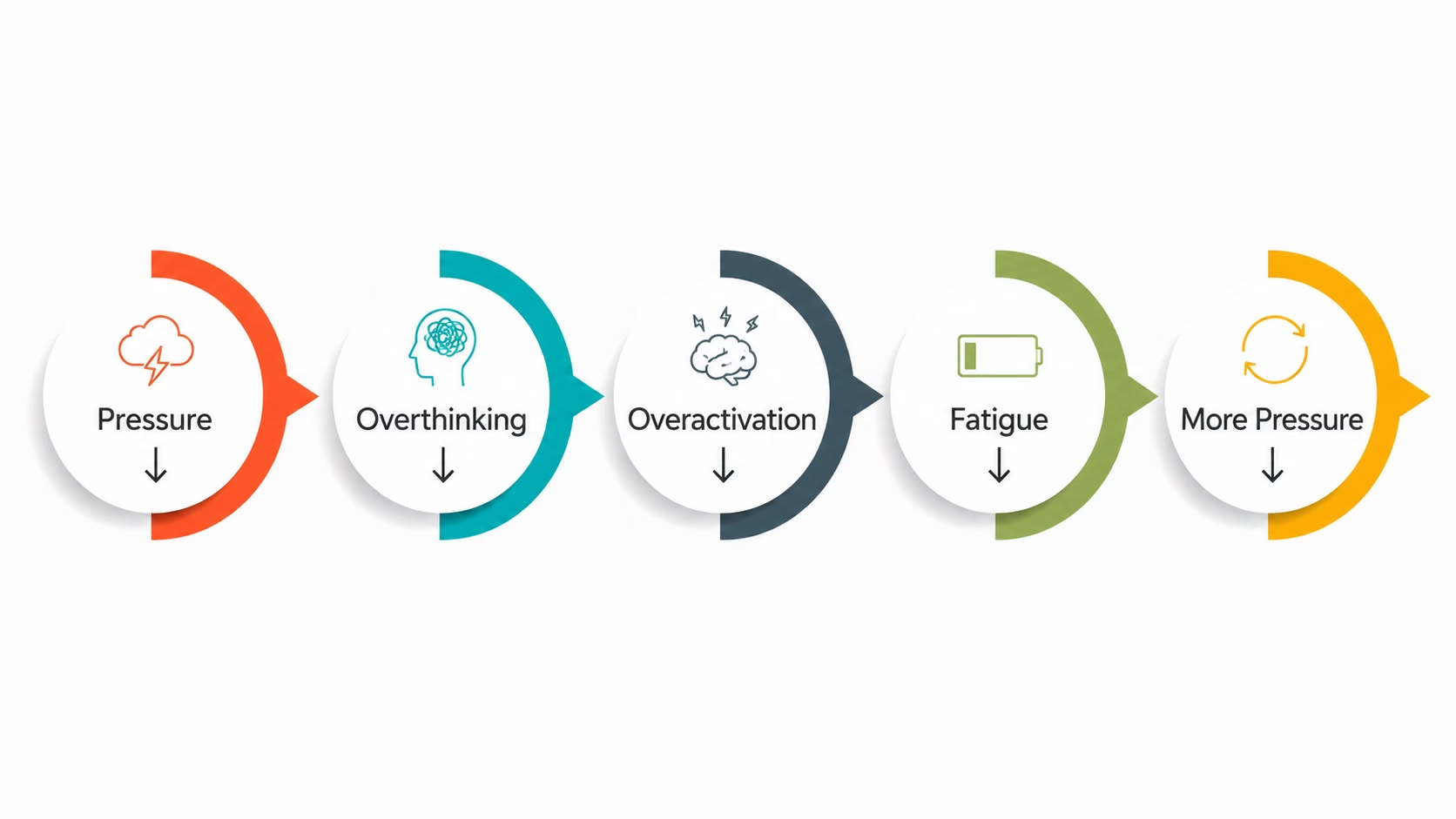
The challenge is that symptoms are frequently part of a broader pattern involving thoughts, emotions, behaviours, nervous system responses, habits, attention, relationships, and environmental demands.
Focusing on one part of the system can sometimes provide temporary relief, while the broader pattern remains unchanged.
For this reason, the work focuses on understanding how these factors interact and identifying the processes that may be maintaining the difficulty.
If You Have Questions…
Just Reach Out
Want to discuss what is going on for you and how I might be able to support you make some changes?
Approaches That May Be Incorporated
Depending on the individual and presenting patterns, the work may incorporate a range of structured and integrative approaches.
These approaches are not applied mechanically or identically for every person. They are used thoughtfully and selectively according to the individual’s needs, goals, nervous system patterns, and capacity.
Internal Family Systems (IFS)-Informed Work
Internal Family Systems (IFS) offers a structured way of understanding the different emotional patterns, protective responses, and internal conflicts that can contribute to anxiety, self-criticism, perfectionism, emotional overwhelm, and difficulty switching off. Rather than viewing these reactions as problems to eliminate, IFS helps develop greater understanding of the underlying processes involved and supports increased emotional regulation, self-awareness, and internal coherence where appropriate.
Learn more Internal Family Systems
Structured Trauma Resolution Work
For some individuals, longstanding patterns of anxiety, hypervigilance, emotional overactivation, or persistent stress responses may be influenced by unresolved past experiences. Where appropriate, structured trauma resolution approaches, including TRTP-informed processes, may be incorporated to help address these patterns. The focus is not on repeatedly revisiting distressing experiences, but on supporting greater regulation, reduced reactivity, and improved present-day functioning.
Learn more Structured Trauma Resolution Work
Clinical Hypnotherapy
Clinical hypnotherapy may be incorporated to support nervous system regulation, behavioural change, emotional settling, sleep improvement, and the reduction of automatic stress responses. The approach used is structured, psychologically informed, and integrated within broader therapeutic work where appropriate. Hypnotherapy is not used as a standalone solution, but as one of several tools that may assist in supporting meaningful and sustainable change.
Learn more Clinical Hypnotherapy
Tailored To The Person. Not The Label.
Professional Background
Before working in this field, I spent more than 20 years working within Finance & Risk at NAB.
This background provides a strong understanding of:
- high-pressure professional environments
- performance expectations
- responsibility and decision fatigue
- perfectionistic and high-functioning coping styles
- the internal strain that can exist beneath external competence
Many clients value working with someone who understands both the psychological and practical realities of functioning under ongoing pressure.
The Broader Goal of the Work
While each person’s goals differ, many clients seek support to develop:
- greater emotional stability
- reduced anxiety and internal pressure
- improved self-regulation
- clearer thinking under pressure
- stronger attentional control
- improved recovery and sleep
- reduced reactivity and overwhelm
- increased internal calm
- greater resilience and flexibility
For many people, the work is ultimately about moving from:
- continual internal management
- chronic overactivation
- survival-driven functioning
toward:
- steadiness
- regulation
- clarity
- sustainability
- greater quality of life
FAQ’s
Is this traditional weekly talk therapy?
The work is generally more structured and integrative than traditional supportive talk therapy alone.
While insight and understanding are important, the focus is also on supporting meaningful shifts in emotional regulation, nervous system patterns, attentional functioning, and internal responses.
Are specific modalities used with everyone?
No.
Different people require different approaches depending on:
- presenting patterns
- nervous system responses
- emotional regulation capacity
- goals
- preferences
- readiness for particular forms of work
The approach is tailored rather than formulaic.
Can you help if I’ve been struggling with these patterns for years?
Yes.
Many clients have spent years managing anxiety, overthinking, emotional strain, or chronic internal pressure before seeking support.
While every person’s situation is different, longstanding patterns can often become more understandable and changeable when the underlying drivers are identified and addressed rather than simply managed.
Do I need to identify as having trauma?
No.
Many people seeking this work would not describe themselves as having “trauma.”
The focus is less on labels and more on understanding and resolving the patterns contributing to anxiety, overload, emotional strain, attentional difficulties, or chronic nervous system activation.
How effective is online work?
Many clients are initially surprised by how effective online sessions can be.
Because the work focuses on patterns, emotional responses, nervous system processes, and practical change, it often translates exceptionally well to an online format.
Online sessions also provide greater convenience, privacy, and flexibility, allowing clients to engage in the work from their own environment without the time and stress associated with travel.
How do I know if this is the right fit for me?
The initial consultation is designed to help answer that question.
It provides an opportunity to discuss what you are experiencing, explore what may be contributing to the patterns involved, and determine whether this approach feels appropriate for your needs and goals.
Finding the right fit is important, and there is no obligation to proceed beyond the initial consultation.
Online Support Across Australia
Sessions are provided online and accessible across Australia.
Online work allows many professionals and high-performing individuals to access support privately, flexibly, and without the additional stress of travel or commuting.
Next Step
If ongoing anxiety, mental overload, emotional strain, attentional fatigue, nervous system overactivation, or difficulty switching off are affecting your wellbeing, relationships, recovery, or performance, you are welcome to book a private consultation.
The initial consultation provides an opportunity to explore:
- what may be contributing to these patterns
- how the work is approached
- whether this feels like an appropriate fit for your needs