When recovery improves, everything else becomes easier.

Sleep, Recovery & Nervous System Regulation
When your mind stays active long after the day ends, your body struggles to fully settle, or sleep no longer feels genuinely restorative.
Specialist support for professionals and high-functioning individuals experiencing sleep disruption, nervous system overactivation, mental overload, or difficulty switching off.
“Many people are physically tired but neurologically still switched on.”
When Rest Stops Feeling Restorative
Many people experiencing ongoing anxiety, overload, or chronic internal pressure eventually notice it affecting their sleep.
This may include:
- difficulty falling asleep
- waking during the night
- light or fragmented sleep
- waking already tense or mentally active
- racing thoughts at night
- difficulty switching off after work or responsibility
- exhaustion despite adequate hours in bed
- feeling physically tired but mentally alert
For some people, sleep disruption develops gradually over years and becomes normalised.
Others reach a point where their nervous system no longer feels able to properly settle or recover.

Common Experiences
People seeking support in this area often describe:
- difficulty “switching off”
- mentally replaying conversations or responsibilities
- waking with immediate tension or urgency
- persistent internal restlessness
- sleep disrupted by anxiety or hypervigilance
- exhaustion combined with mental overactivity
- needing constant stimulation to stay functional
- cycles of overperformance followed by shutdown
- feeling permanently “wired but tired”
Others describe:
“My body is exhausted, but my mind never fully settles.”
If You Have Questions…
Just Reach Out
Want to discuss what is going on for you and how I might be able to support you make some changes?
Learn more about the Restorative Sleep Reset
Sleep Difficulties Are Often Linked to Nervous System Activation
For many high-functioning individuals, the issue is not simply “poor sleep habits.”
The nervous system may have become chronically conditioned toward:
- alertness
- vigilance
- internal pressure
- mental overactivity
- emotional suppression
- continual cognitive processing
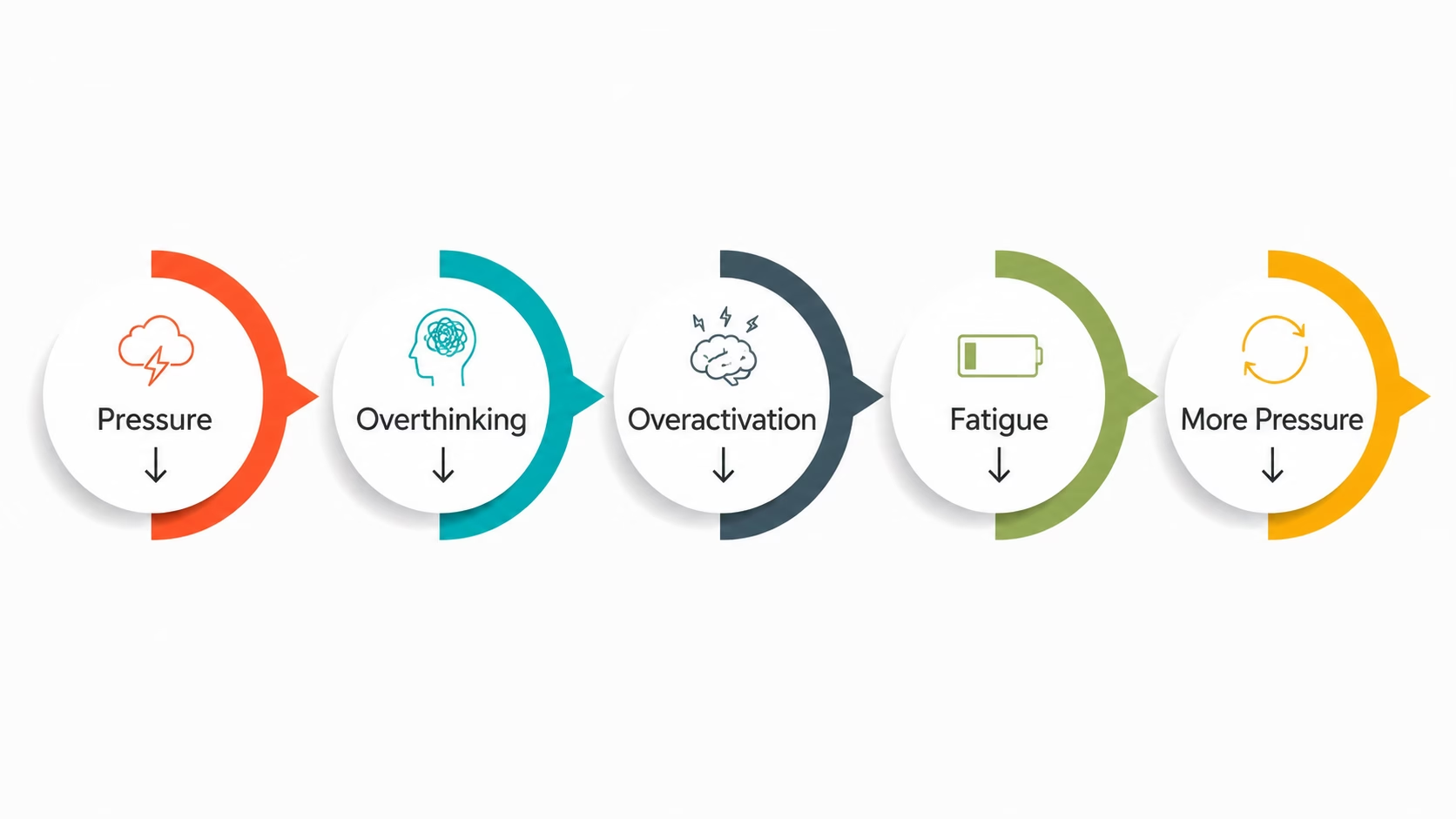
This can create a state where:
- the body feels tired
- but the mind remains active
- or sleep occurs without genuine recovery
Over time, chronic nervous system activation can affect:
- concentration and focus
- emotional regulation
- resilience under pressure
- energy and motivation
- stress tolerance
- mood and wellbeing
- physical recovery
High Functioning Can Mask Chronic Exhaustion
Many professionals and high-performing individuals continue functioning despite significant nervous system strain and inadequate recovery.
They may continue:
- working effectively
- meeting obligations
- maintaining outward composure
- appearing highly capable
while internally experiencing:
- chronic fatigue
- cognitive overload
- emotional depletion
- irritability
- reduced resilience
- difficulty remaining present or calm
Because they continue functioning, the impact of chronic nervous system activation is often underestimated.
Over time, however, prolonged overactivation can become increasingly difficult to sustain.
Recovery Is Not A Luxury. It Is A Requirement.
Understanding the Patterns Beneath Sleep Disruption
For some individuals, sleep difficulties are closely connected to:
- chronic stress exposure
- longstanding anxiety patterns
- hypervigilance
- perfectionism
- over-responsibility
- emotional suppression
- unresolved nervous system activation
- pressure-driven coping styles
In some cases, earlier life experiences may also contribute to patterns of heightened internal alertness or difficulty fully relaxing.
Understanding and resolving these deeper patterns often allows more meaningful and sustainable change than focusing only on surface-level sleep strategies.
Supporting Recovery, Regulation, and Internal Settling
The goal of this work is not simply sedation or temporary symptom management.
The focus is on helping the nervous system move toward:
- greater regulation
- improved recovery capacity
- emotional settling
- reduced internal overactivation
- increased calm and stability
- improved ability to mentally disengage and rest
As underlying patterns shift, many people experience:
- deeper recovery
- improved emotional regulation
- reduced mental overload
- increased resilience under pressure
- better concentration and clarity
- improved sleep quality and consistency
Restorative Sleep Reset
A structured program for individuals seeking more targeted support with sleep and recovery.
For some people, understanding the factors contributing to disrupted sleep is enough to begin making meaningful changes.
Others benefit from a more personalised and structured approach.
The Restorative Sleep Reset is a comprehensive program designed to identify and address the factors contributing to ongoing sleep difficulties, poor recovery and nervous system activation.
The program begins with a detailed assessment and then develops a personalised plan tailored to the individual’s specific patterns, circumstances and goals.
Rather than relying on generic sleep advice, the focus is on understanding what is maintaining the problem and creating practical strategies that support lasting improvement.
Whether sleep difficulties are being influenced by anxiety, stress, overthinking, emotional activation, attentional strain or recovery challenges, the program provides a structured pathway toward better sleep and improved wellbeing.

Professional Background
Before working in this field, I spent more than 20 years working within Finance & Risk at NAB.
This background provides a strong understanding of:
- high-pressure professional environments
- performance expectations
- responsibility and decision fatigue
- perfectionistic and high-functioning coping styles
- the internal strain that can exist beneath external competence
Many clients value working with someone who understands both the psychological and practical realities of functioning under ongoing pressure.
A Structured and Integrative Approach
Sleep disruption is often connected to broader patterns involving anxiety, overload, nervous system dysregulation, emotional strain, or chronic internal activation.
Rather than applying a one-size-fits-all model, the work is tailored to the individual and focused on understanding the underlying patterns contributing to ongoing sleep and recovery difficulties.
FAQ’s
Is this only for people with severe anxiety?
No.
Many clients continue functioning well professionally while internally experiencing significant mental overload, emotional strain, or difficulty switching off.
The work is often suited to people who appear highly capable externally but recognise that ongoing internal pressure is affecting their wellbeing or quality of life.
Is this traditional talk therapy?
The work is generally more structured and integrative than traditional weekly talk therapy.
While insight and understanding are important, the focus is also on supporting meaningful shifts in emotional regulation, nervous system patterns, and internal responses.
Can you help if I’ve been struggling with these patterns for years?
Yes.
Many clients have spent years managing anxiety, overthinking, emotional strain, or chronic internal pressure before seeking support.
While every person’s situation is different, longstanding patterns can often become more understandable and changeable when the underlying drivers are identified and addressed rather than simply managed.
Do I need to identify as having trauma?
No.
Many people seeking this work would not describe themselves as having “trauma.”
The focus is less on labels and more on understanding and resolving the patterns contributing to ongoing anxiety, overwhelm, emotional reactivity, or nervous system strain.
Where relevant, earlier experiences and longstanding conditioning may be explored as part of the process.
How effective is online work?
Many clients are initially surprised by how effective online sessions can be.
Because the work focuses on patterns, emotional responses, nervous system processes, and practical change, it often translates exceptionally well to an online format.
Online sessions also provide greater convenience, privacy, and flexibility, allowing clients to engage in the work from their own environment without the time and stress associated with travel.
How do I know if this is the right fit for me?
The initial consultation is designed to help answer that question.
It provides an opportunity to discuss what you are experiencing, explore what may be contributing to the patterns involved, and determine whether this approach feels appropriate for your needs and goals.
Finding the right fit is important, and there is no obligation to proceed beyond the initial consultation.
Online Support Across Australia
Sessions are provided online and accessible across Australia.
Online work allows many professionals and high-performing individuals to access support privately, flexibly, and without the additional stress of travel or commuting.
Next Step
If ongoing anxiety, mental overload, emotional strain, attentional fatigue, nervous system overactivation, or difficulty switching off are affecting your wellbeing, relationships, recovery, or performance, you are welcome to book a private consultation.
The initial consultation provides an opportunity to explore:
- what may be contributing to these patterns
- how the work is approached
- whether this feels like an appropriate fit for your needs
Learn more about the Restorative Sleep Reset