
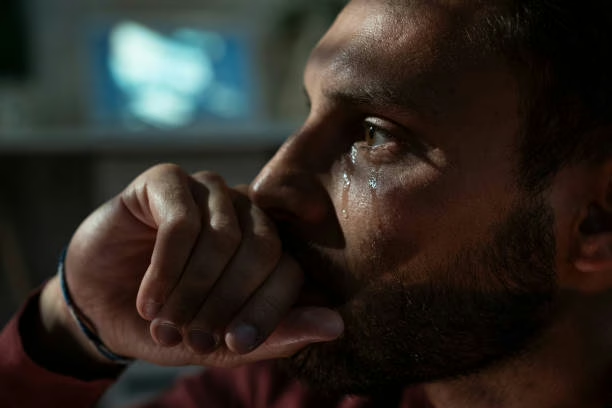
When loss is sudden, violent, unexpected, or deeply shocking, grief can feel overwhelming in ways that are hard to explain. This is often referred to as traumatic grief — where trauma and loss intertwine.
Grief expert David Kessler describes this kind of grief powerfully:
“Traumatic grief doesn’t knock politely. It breaks down the door.”
Unlike anticipated loss, traumatic loss can shatter our sense of safety and predictability. It can leave us feeling disoriented — not only grieving the person or situation we’ve lost, but also grieving the world as we once understood it.
What Makes Traumatic Grief Different?
All grief is painful. But traumatic grief often carries additional layers, including:
- Intrusive images or distressing memories that replay unexpectedly
- Sudden emotional flooding — panic, despair, rage, or numbness
- Persistent “what if” or “if only” thoughts
- Intense guilt or self-blame
- A heightened startle response or sense of danger
- Avoidance of reminders — or feeling ambushed by them
- Feeling fundamentally changed, as though the “old you” is gone
In traumatic grief, the nervous system remains on high alert. The body may react as though the threat is still present. Sleep can be disrupted. Concentration becomes difficult. Ordinary moments — a sound, a smell, a date on the calendar — can trigger a powerful wave of distress.
As Kessler reassures:
“Your reactions make complete sense.”
This reminder matters. Many people worry that they are “doing grief wrong” or that something is broken inside them. In reality, these responses are often the mind and body’s natural attempt to process something overwhelming.
Why Trauma Intensifies Grief
When a loss is traumatic, the brain struggles to integrate what happened. Traumatic events can disrupt our core assumptions about safety, fairness, identity, and the future.
Instead of flowing between sadness and moments of respite, traumatic grief may feel stuck — cycling between shock, horror, longing, and helplessness. The nervous system may not yet feel safe enough to fully process the loss.
In some cases, earlier unresolved experiences can resurface. Old wounds may feel closer to the surface. This doesn’t mean someone is regressing; it often means the current loss has touched something deeper.
Common Experiences in Traumatic Grief
People navigating traumatic loss often report:
- Feeling isolated because others don’t understand the intensity
- Wanting to talk about the loss constantly — or not at all
- Fear that the pain will never change
- Anger at the circumstances, others, themselves, or even the person who died
- Difficulty reconnecting with daily life
It’s also common to grieve the secondary losses: the future that won’t happen, the identity that shifted, the sense of safety that was lost.
Healing Is Not Erasing
One of the most important truths about traumatic grief is this: healing does not mean forgetting or minimizing what happened.
Healing is not about “moving on.”
It is about learning how to carry the loss without being crushed by it.
Over time — and often with the right support — the nervous system can settle. Intrusive memories can soften. Guilt can be examined more gently. Meaning can slowly emerge, even if the loss itself remains deeply painful.
Grief has no timetable. Traumatic grief especially cannot be rushed. But it is not a life sentence of unrelenting intensity. With compassion, understanding, and patience, it is possible to live again — not as the person you were before the loss, but as someone who has integrated it into their story.
If you or someone you know is navigating traumatic loss, know this: the overwhelm makes sense. The reactions make sense. And while the pain may feel permanent, change is possible — one steady step at a time.